
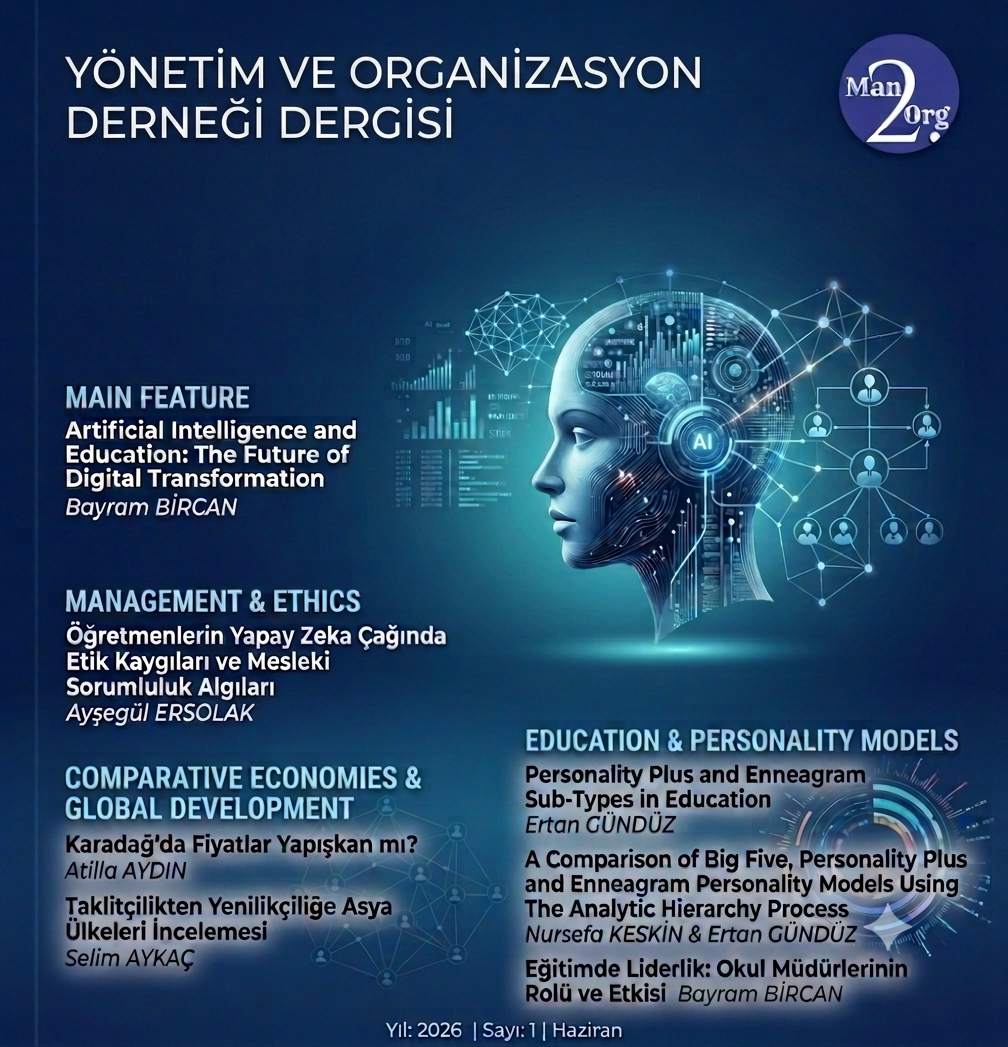
FROM IMITATION TO INNOVATION: A STUDY OF EAST ASIAN COUNTRIES
Keywords:
Technology Gap, Product Life Cycle, Patent Numbers, New Product Development, Asian CountriesAbstract
The primary objective of this study is to examine the structural transformation of developing Asian economies within the global trade arena, focusing on their evolution from imitation-based production models into innovative, new product-developing powerhouses. Utilizing annual data spanning the 2005–2024 period, the research empirically analyzes the dynamic effects of Asian countries' digital development, high-technology exports, and R&D expenditures on annual patent applications, which serves as a tangible output of new product development performance. To eliminate the risk of spurious regression common in time-series data, a regression model was estimated using the Ordinary Least Squares (OLS) method based on the first differences of the variables. The empirical findings indicate that the growth rate of high-technology exports has a positive and statistically significant impact on the acceleration of patent registrations (p<0.05$). The analysis reveals that a 1% acceleration in the growth rate of high-technology exports leads to a 1.14% increase in the number of patents. Conversely, while the effect of the growth rate of R&D expenditures on patent productivity is positive, it was found to be statistically insignificant. Conclusively, the study confirms that Asian countries have successfully shifted the product life cycle in their favor through robust digital and technological infrastructure investments, thereby shedding their imitator identity and gaining a sustainable competitive advantage in the global market.
References
Altuntaş, F., & Akgül, A. K. (2019). Veri Madenciliği ile Teknolojilerin Değerlendirilmesi: RFID Teknolojileri Üzerine Bir Uygulama. Verimlilik Dergisi(4), 65-86.
Altuntaş, F., & Yılmaz, M. K. (2017). Patent Analizi İle Teknoloji Ağlarının Oluşturulması. Journal of Entrepreneurship and Innovation Management, 6(2), 97-129.
Aykaç, S., & Civelek, M. E. (2019). The Effect Of Mobile Phone Subscription Rate On Export-Import Cavorage Ratio. Eurasian Academy of Sciences(19), 123-133.
Barro, R. J., & Sala-i-Martin, X. (1997). Technological Diffusion, Convergence and Growth. Journal of Economic Growth,, 1-26.
Bekoğlu, F. B., & Ergen, A. (2016). Yeni Ürün Geliştirme ve Lansman Stratejileri. International Journal of Human Sciences, 13(1), 923-938.
Bozkurt, K. (2014). Patent Verileri ve Teknolojik Sınıflama Sistemleri. Adnan Menderes Üniversitesi, Sosyal Bilimler Enstitüsü Dergisi, 1(1), 65-80.
Cengiz, E., Ayyıldız, H., & Kırkbir, F. (2005). Yeni Ürün Geliştirme Sürecinin Başarısında Etkili Olan Faktörler. Erciyes Üniversitesi İktisadi ve İdari Bilimler Fakültesi Dergisi, 0(24), 133-147.
Cengiz, E., Ayyıldız, H., & Kırkbir, F. (2006). Yeni Ürün Geliştirme Sürecinde Aşama-Eşiği Yöntemiyle Süreç Performans Değerlendirmesi. Atatürk Üniversitesi Sosyal Bilimler Enstitüsü Dergisi, 7(1), 435-452.
Chinn, M. D., & Fairlie, R. W. (2010). ICT Use in the Developing World: An Analysis of Differences in Computer and Internet Penetration. Review of International Economics, 153-167.
Cooper, R. (1990). Stage Gate Systems: A New Tool for Managing New Products. Businnes Horizons, 44-53.
Cooper, R., & Kleinschmidt, E. J. (1986). An Investigation into the New Product Process: Steps, Deficiencies, and Impact. Journal of Product Innovation Management, 3(33), 71-85.
Demir, O., Üzümcü, A., & Duran, S. (2006). İçsel Büyümede İçselleşme Süreçleri: Türkiye Örneği. Dokuz Eylül University Faculty of Economics and Administrative Sciences Journal, 27-47.
Dura, C. (2000). Yeni Dış Ticaret Teorileri: Genel Bir Bakış. Erciyes Üniversitesi İktisadi ve İdari Bilimler Fakültesi Dergisi, 16(1), 1-16.
Erdost, C. (1982). Sermayenin Uluslararasılaşması ve Teknoloji Transferi. Ankara: Savaş Yayınları.
Fagerberg, J. (1987). A technology gap approach to why growth rates differ. Research Policy, 3(16), 87-99.
Hoffart, C., & Kamps, K. (2010). Life Cycle Costing As A Strategy – Sustainable Operations Of Signalling Systems In The Railway İnfrastucture. Toward Sustainable Manufacturing, 1-15.
ITU. (2020). Statistics. İsviçre: International Telecommunication Union.
Kalaycı, C. (2013). Dijital Bölünme, Dijital Yoksulluk ve Uluslararası Ticaret. Atatürk Üniversitesi İktisadi ve İdari Bilimler Dergisi, 3(27), 145-162.
Kotabe, M., & Swan, K. S. (1984). Offshore Sourcing: Reaction, Maturation, and Consolidation of US Multinationals. Journal of International Business Studies, 0(25), 72-89.
Kotler, P. (2004). Marketing Management. New Jersey: Prentice Hall, Inc.
TİM (2024, Ağustos). TİM İnoSuit Programı. Türkiye İhracatçılar Meclisi:
https://tim.org.tr/tr/tim-inosuit-programi-1 adresinden alındı.
UNESCO. (2021). Research and Development Expenditure (% of GDP). World Bank.
WIPO. (2020). Patent Applications. World Bank.
World Bank. (2020). High Technology Exports - China. World Bank Data.
Downloads
Published
How to Cite
Issue
Section
License
Copyright (c) 2026 Journal of Management Organization Association

This work is licensed under a Creative Commons Attribution-NonCommercial 4.0 International License.


